
Real Talk – Conversations That Build Character
Let’s be honest for a moment.
Most young men aren’t walking around feeling “fine.” They’re walking around performing fine…holding things in, pushing things down, and pretending the pressure doesn’t exist.
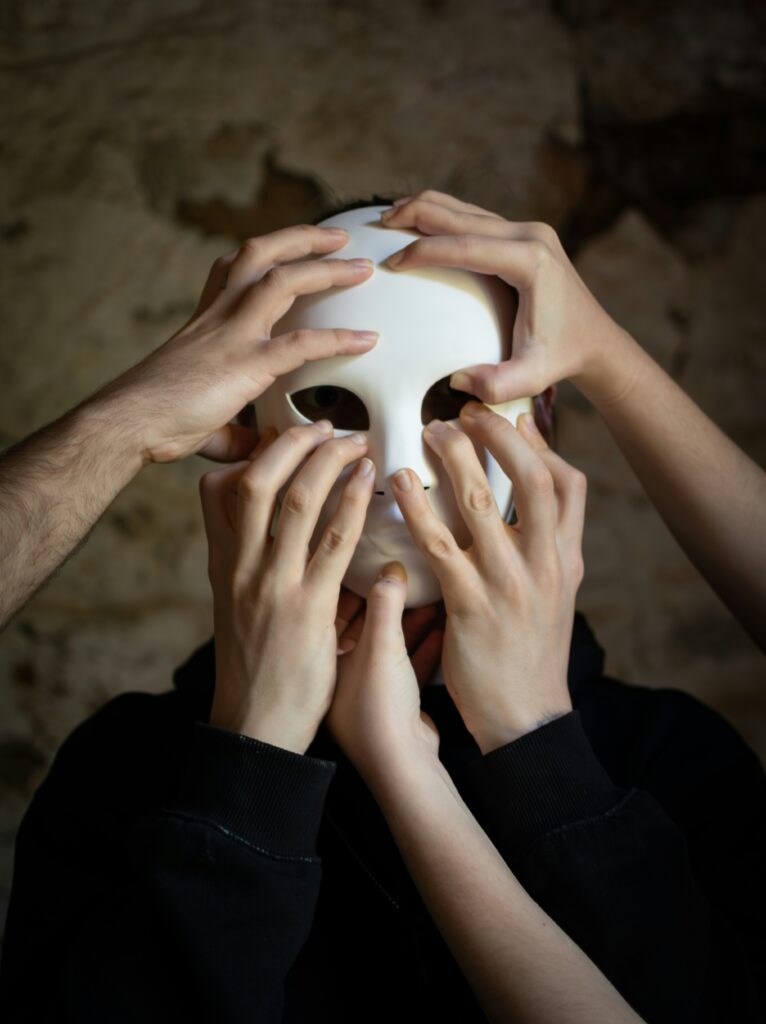
The mask doesn’t appear overnight. It builds slowly. The first time someone says, “Man up.” The first time tears get laughed at. The first time you realize people respect toughness more than honesty. From that point on, many young men start learning how to hide instead of how to heal.
And after a while, the mask stops feeling like something you wear. It starts feeling like who you are.
What the Mask Actually Looks Like
The mask isn’t always loud. Sometimes it looks like silence. Sometimes it looks like joking, so nobody asks real questions. Sometimes it looks like staying busy, so you never have to sit with what you feel. And sometimes it shows up as anger, because anger feels safer than admitting something hurt you.
Behind the mask are the same emotions everyone else carries: pressure, fear, insecurity, disappointment, grief, but many young men were never permitted to show them.
Why We Wear It
Masks don’t start as lies. They start as survival.
Boys grow up watching men handle problems without talking about them. They hear phrases like “handle it,” “don’t complain,” and “figure it out.” Over time, silence becomes normal. Speaking honestly starts to feel risky, while pretending becomes automatic.
But what once protected you can eventually isolate you.
Taking the Mask Off – One Step at a Time
Removing the mask doesn’t mean telling everyone everything. It means choosing at least one place where you don’t have to pretend, one trusted friend, one mentor, one conversation where “I’m good” isn’t the automatic answer.
Authenticity grows in small steps. One real conversation. One moment where you say, “I’m not okay,” instead of brushing it off. One decision to express what you feel instead of burying it.
That’s not weakness. That’s emotional discipline.
Brotherhood Starts with Someone Being Real First
Real brotherhood isn’t built on pretending. It’s built on trust. And trust starts when someone is brave enough to be honest first.
When one young man drops the mask, it permits others to do the same. That’s how environments change. That’s how friendships deepen. That’s how mentorship becomes real instead of surface-level.
The Cost of the Mask
When we talk about “being tough,” here’s what the research shows:
- Men who strongly conform to traditional masculine norms report higher levels of depression and emotional distress (APA, 2018).
- Emotional restriction is linked to lower relationship satisfaction and increased psychological strain (Mahalik et al, 2003).
- Men who feel pressure to appear strong are significantly less likely to seek mental health support, even when they need it (Wong et al, 2017).
The mask may look strong, but the numbers tell a different story.
Real Talk Reflection
Think about one “mask” you wear in daily life…something you say, do, or hide to avoid being judged.
Now ask yourself: Who is one person I can be more real with this week?
You don’t have to remove the mask everywhere at once. But every time you choose honesty over performance, you take another step toward becoming the version of yourself that doesn’t have to pretend.
Real strength isn’t about acting tough.
Real strength is being authentic.
References
American Psychological Association. (2018). APA guidelines for psychological practice with boys and men. https://www.apa.org/about/policy/boys-men-practice-guidelines.pdf
Mahalik, J.R., Locke, B.D., Ludlow, L.H., Diemer, M.A., Scott, R.P., Gottfried, M., Freitas, G. (2003). Development of the conformity to masculine norms inventory. Psychology of Men & Masculinity, 4(1), 3-25. https://doi.org/10.1037/1524-9220.4.1.3
Wong, Y.J., Ho, M.R., Wang, S.Y., & Miller, I.S.K. (2017). Meta-analyses of the relationship between conformity to masculine norms and mental health-related outcomes. Journal of Counseling Psychology, 64(1), 80-93. https://doi.org/10.1037/cou0000176
Leave a Comment